We are reader-supported. Buying through any red colored link on our site may earn us commissions. Learn More.
A solitaire ring is the style almost every bride pictures when she thinks about her engagement ring. One diamond. Clean lines. Nothing else competing for attention. I’ve spent over 25 years looking at engagement rings for a living, and the solitaire is one of the styles I recommend most.
This guide walks you through exactly how to choose one using one of our preferred retailers, Brilliant Earth, as an example. I’ll cover setting styles, diamond shapes, metals, and how the Design Your Own tool works. I’ll also point you toward a few specific Brilliant Earth settings worth a look.
Bottom Line Up Front
If you want a classic, low-profile solitaire that works with almost any diamond shape, start with the Comfort Fit 2mm Solitaire Ring (starting at $750). If you want a setting with a little more presence, look at the Elodie Cathedral Solitaire Ring (starting at $990). And if you want something a bit less common, the Atelier Solitaire Ring (starting at $1,190) uses a sculptural bypass design that most other stores don’t carry.
Whichever setting you pick, Brilliant Earth lets you pair it with any natural or lab grown diamond through its Design Your Own tool, and you can see the finished ring in 3D before you buy.
Here’s What We’ll Cover:
- What Is a Solitaire Engagement Ring?
- Step 1: Pick a Setting Style
- Step 2: Choose a Diamond Shape
- Step 3: Pick a Metal
- Step 4: Natural or Lab Grown Diamond?
- Step 5: Build Your Ring with Brilliant Earth’s Design Your Own Tool
- 3 Brilliant Earth Solitaire Settings to Consider
- How Much Does a Brilliant Earth Solitaire Ring Cost?
- Bottom Line
- FAQ
What Is a Solitaire Engagement Ring?
A solitaire ring holds one diamond and nothing else. No side stones. No halo. Just prongs or a bezel holding the center stone in place.
That simplicity is the whole point. Nothing distracts from the diamond. Light hits it straight on, which is part of why a well-cut solitaire can look brighter than the same stone set in a busier ring.
So why do so many buyers still choose this style after all these years? Because it works with any diamond shape, any budget, and any hand. A solitaire ring never looks dated.
Step 1: Pick a Setting Style
Brilliant Earth’s solitaire collection covers a range of setting styles. Here’s what to know about each one before you start browsing.
Four-prong and six-prong settings. Four prongs show off more of the diamond. Six prongs hold the stone a bit more securely, which some buyers like for larger center stones.
Cathedral settings. The band arches up toward the stone, which lifts the diamond and gives the ring a bolder profile. The Elodie Cathedral Solitaire Ring at Brilliant Earth uses this style.
Bezel settings. A rim of metal wraps around the diamond instead of prongs. This protects the stone during daily wear and gives the ring a more modern look.
Low-profile and comfort-fit bands. These sit closer to the finger and have a rounded interior that feels smoother against the skin. The Comfort Fit 2mm Solitaire Ring is built this way.
What matters most here? Think about how you live day to day. If you work with your hands, a lower setting or a bezel makes more sense. If you want maximum sparkle, a higher prong setting lets in more light.
Step 2: Choose a Diamond Shape
A solitaire setting works with any diamond shape, but the shape changes the look quite a bit.
Round diamonds are the classic pick. They have the most facets, so they tend to sparkle the most in a solitaire.
Oval diamonds have sparkle similar to round stones but look larger for the same carat weight because the shape is elongated.
Emerald and asscher cuts have long, flat facets instead of small triangular ones. They flash instead of sparkle, which gives the ring a quieter, more polished look.
Cushion, princess, and radiant cuts sit somewhere in between, with more brilliance than a step-cut stone but a different silhouette than a round.
Step 3: Pick a Metal
Brilliant Earth solitaire settings come in platinum, 14K and 18K white gold, 14K and 18K yellow gold, and 14K and 18K rose gold.
Platinum is the most durable option and holds up well over decades of daily wear. It’s naturally white and doesn’t need replating.
White gold gives you a similar look to platinum at a lower price. It’s usually plated in rhodium, so it may need replating every few years to keep its bright white color.
Yellow gold and rose gold both add warmth to the ring. Yellow gold pairs well with warmer skin tones, and rose gold has become one of the more popular choices for its softer look.
Brilliant Earth uses approximately 99% repurposed precious metals across its settings. That means the gold or platinum in your ring has already been through the refining process once before, rather than coming from newly mined material.
Step 4: Natural or Lab Grown Diamond?
This is one of the biggest decisions in building a solitaire ring, and there’s no wrong answer.
Natural diamonds formed in the earth over billions of years. Every natural diamond at Brilliant Earth must meet the Beyond Conflict Free™ standard, a sourcing standard that goes beyond the industry’s baseline, the Kimberley Process. It covers five things: no financing of civil wars, no human rights abuses, fair labor practices, environmental responsibility, and support for the communities near the mines. Less than 1% of the world’s natural diamonds meet this bar.
Lab grown diamonds are produced in a lab using the same process that forms natural diamonds, just sped up. They have the same chemical makeup, the same hardness, and the same sparkle. The only difference is where they come from, and that difference usually means a lower price. A lab grown diamond typically costs significantly less than a natural diamond of the same size and quality, which means you can go bigger on carat weight for the same budget.
So which one is right for you? If the natural origin matters to you, go natural. If you want more carat weight at a lower price, lab grown is a practical choice. Brilliant Earth carries both and lets you preview either one in any solitaire setting before you buy.
Step 5: Build Your Ring with Brilliant Earth’s Design Your Own Tool
Once you’ve picked a setting style, shape, and metal, Brilliant Earth’s Design Your Own tool walks you through the rest in three steps.
Step one: choose your setting. Browse solitaire styles by metal, prong type, and band width, and pick the one that fits your style.
Step two: choose your diamond. Brilliant Earth lets you search thousands of natural and lab grown diamonds, each with a certificate from a lab like IGI or GIA.
Step three: complete your ring. Once you pick your diamond, Brilliant Earth shows you a digital preview of the finished ring, including a 3D view you can rotate. You can save it to your wish list or add it to your bag right there.
If you’d rather see the ring in person, Brilliant Earth has 40+ stores across the US where you can book an appointment and try on settings with a jewelry specialist before you commit.
3 Brilliant Earth Solitaire Settings to Consider
I pulled specs and prices directly from Brilliant Earth’s product pages. Here are three solitaire settings that cover a range of styles and budgets.
Comfort Fit 2mm Solitaire Ring

Starting at $750
Available in: 14K yellow gold, 14K white gold, 18K yellow gold, 18K white gold, 14K rose gold, and platinum
This is the setting I’d point most first-time buyers toward. Four prongs hold the stone, and the 2mm band sits low on the finger with a rounded, comfort-fit interior. That low profile means it won’t catch on gloves, sweaters, or anything else you touch during the day.
The band is thick enough to feel substantial without being bulky, and it stacks well with a wedding band later on. This setting can hold round, oval, emerald, radiant, cushion, princess, or asscher diamonds.
Elodie Cathedral Solitaire Ring
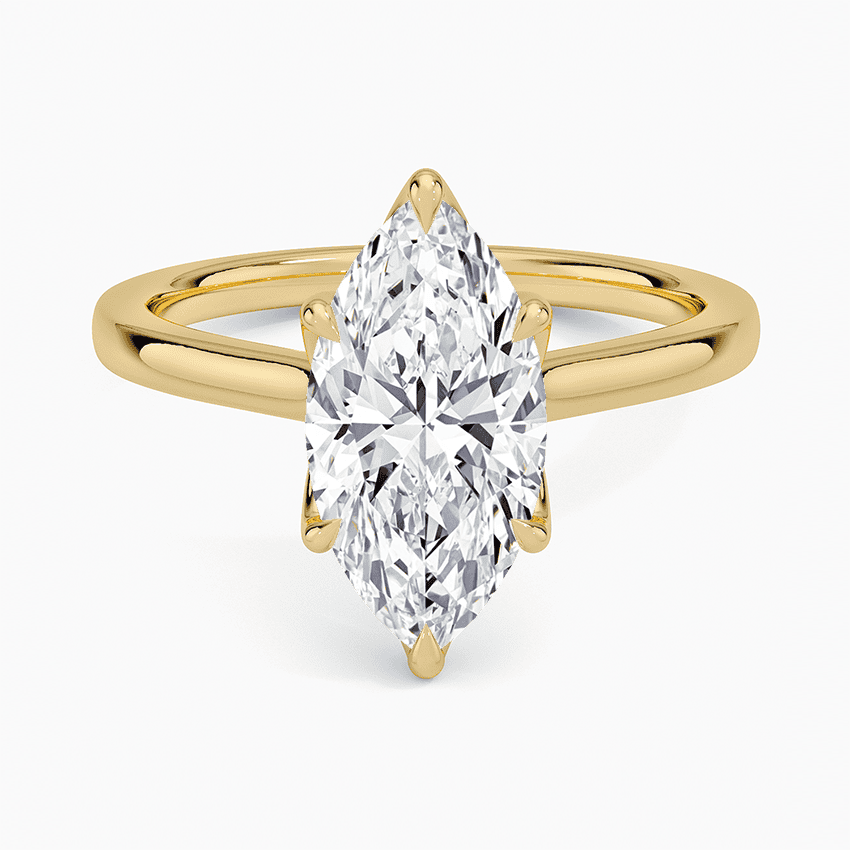
Starting at $990
Available in: 14K yellow gold, 14K white gold, 18K yellow gold, 18K white gold, 14K rose gold, and platinum
The Elodie uses a cathedral setting, which means the band arches upward before it reaches the center stone. That lifts the diamond and gives it a bolder, more elevated look than a flat comfort-fit band.
Four claw prongs hold the stone in an open setting, so plenty of light reaches the diamond from every angle. The raised gallery underneath also leaves room for a wedding band to sit flush against it later, without any gap between the two rings.
Atelier Solitaire Ring
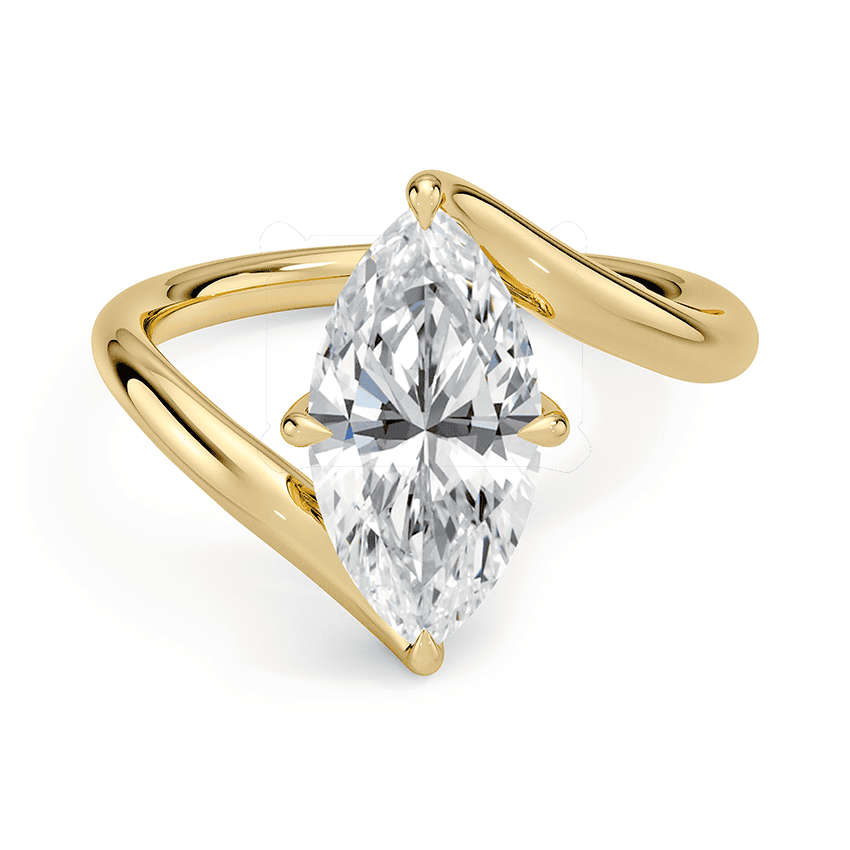
Starting at $1,190
Available in: 14K yellow gold, 14K white gold, 18K yellow gold, 18K white gold, 14K rose gold, and platinum
This is Brilliant Earth’s award-winning pick on this list. The Atelier uses a sculptural bypass design with compass-style claw prongs that wrap around the stone from an angle instead of straight on. The result is a ring that reads as noticeably more modern than a standard four-prong solitaire.
The 2mm band keeps a low profile for daily wear, and the high-polish finish keeps the focus on the center stone rather than the metalwork. This setting can hold round, oval, emerald, pear, radiant, cushion, princess, asscher, or marquise diamonds, so it works with almost any shape you have in mind.
How Much Does a Brilliant Earth Solitaire Ring Cost?
The setting itself is usually the smaller part of the total price. Brilliant Earth’s solitaire settings start around $650 to $750 for a simple comfort-fit band and run higher for more detailed styles like a cathedral or bypass design.
The bigger factor is the diamond. A lab grown diamond typically costs a fraction of a natural diamond at the same carat weight, cut, color, and clarity. Because Brilliant Earth prices the setting and the diamond separately, you can see exactly where your budget is going and adjust either piece to fit what you want to spend.
Bottom Line
A solitaire ring is a safe choice precisely because it never really changes. Pick a setting style that fits how you live, a shape that fits your taste, and a metal that fits your budget, and you’ll end up with a ring that looks just as good in twenty years as it does today.
Brilliant Earth gives you the tools to do all of that in one place, from the setting styles to the diamond search to a 3D preview before you buy. And if you want to see it all in person first, Brilliant Earth’s 40+ stores make that possible too.
Visit Brilliant Earth’s solitaire collection to browse the full range of settings.
FAQ
What is a solitaire engagement ring?
A solitaire engagement ring holds one diamond with no side stones or halo. Prongs or a bezel hold the center stone in place, and the simple design puts all the attention on that one diamond.
Is a solitaire ring a good choice for an engagement ring?
Yes. A solitaire setting works with almost any diamond shape and budget, and it tends to look brighter than more complicated settings because nothing blocks the light from hitting the stone. It’s also one of the easiest styles to resize and maintain.
Can I choose a lab grown diamond for a Brilliant Earth solitaire ring?
Yes. Brilliant Earth lets you pair any solitaire setting with either a natural or lab grown diamond through its Design Your Own tool. Lab grown diamonds usually cost significantly less than natural diamonds of the same size and quality.
How much does a solitaire ring cost at Brilliant Earth?
Brilliant Earth’s solitaire settings start around $650 to $750 for a simple comfort-fit band, with more detailed styles like cathedral and bypass designs running higher. The diamond is priced separately, so your total cost depends mostly on the carat weight, cut, color, and clarity you choose.
What metal should I pick for a solitaire ring?
Platinum holds up the longest and doesn’t need replating, but it costs more than gold. White gold looks similar to platinum for less money but may need occasional replating. Yellow gold and rose gold both give the ring a warmer look and don’t require the same upkeep as white gold.
Can I see a Brilliant Earth solitaire ring in person before buying?
Yes. Brilliant Earth has 40+ stores across the US where you can book an appointment and try on solitaire settings with a jewelry specialist. Virtual appointments are also available if you can’t get to a store.
Still afraid of getting ripped off?
Before you buy a diamond, get personal buying advice from industry veterans. We'll help you get the best diamond for the money.
Ask your diamond purchase question here
DISCLAIMER: We don't use your email for marketing. Period.
You Might Like
Diamond Prices: A Complete Guide
A diamonds’ price is determined primarily by the 4 Cs of the diamond. On the wholesale level, diamond prices are first based on a diamond shape and
The Best Places to Buy Engagement Rings
Buying an engagement ring is often one of the first major purchases in a person's life. The process can be fraught with tension as there is so ma
1 Carat Diamond Price & Buying Guide
A wide range of 1 carat diamonds exist both in online markets and local diamond jewelry stores. Not only are there significant differences in beauty