We are reader-supported. Buying through any red colored link on our site may earn us commissions. Learn More.
Choosing an engagement ring shape is one of the first decisions you’ll make. It might also be the most important one. The shape affects the overall look of the ring, how big the diamond looks on the finger, and how much it costs.
I’ve helped thousands of readers find the right ring over 25+ years in this industry. The question I hear most often isn’t “what cut is best?” It’s “how do I know which shape is right for us?” That’s what I’m going to help you figure out.
Below, I cover all 10 of the most popular engagement ring shapes, what makes each one unique, and who each shape is best suited for. At the end, I’ll walk you through how to make the final call.
Here’s What We’ll Cover:
Popular Engagement Ring Shapes
Every shape listed below is available at Brilliant Earth with both natural and lab grown diamonds. Brilliant Earth carries over 400,000 diamonds across all shapes, sizes, and budgets. Their Design Your Own tool lets you pick any shape and pair it with any setting, so you can see exactly what the finished ring will look like before you commit.
Let’s get into the shapes.
1. Round Cut

Best for: Maximum brightness, any setting style, classic look
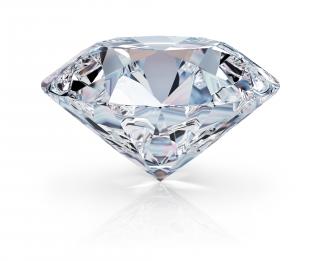
The most popular shape by a wide margin. A round diamond returns more light than any other shape. That’s not a matter of taste. It’s physics.
The round brilliant cut has 58 facets, all designed to reflect as much light as possible back through the top of the stone. The result is maximum sparkle. If you want the brightest diamond you can get, round is the answer.
Round diamonds are also the most versatile. They work in a solitaire, a halo, a vintage setting, or a three-stone ring. Any style you like, a round diamond fits it.
One thing to know: round diamonds cost more per carat than most other shapes. The cutting process removes more of the rough diamond, so you pay more for what’s left. If budget is a concern, the shapes below can get you a larger-looking diamond for less money.
That said, round is popular for a reason. If your partner wants the most sparkle and the most recognized shape, this is where to start.
2. Princess Cut
Best for: Square look with high sparkle, more budget per carat than round
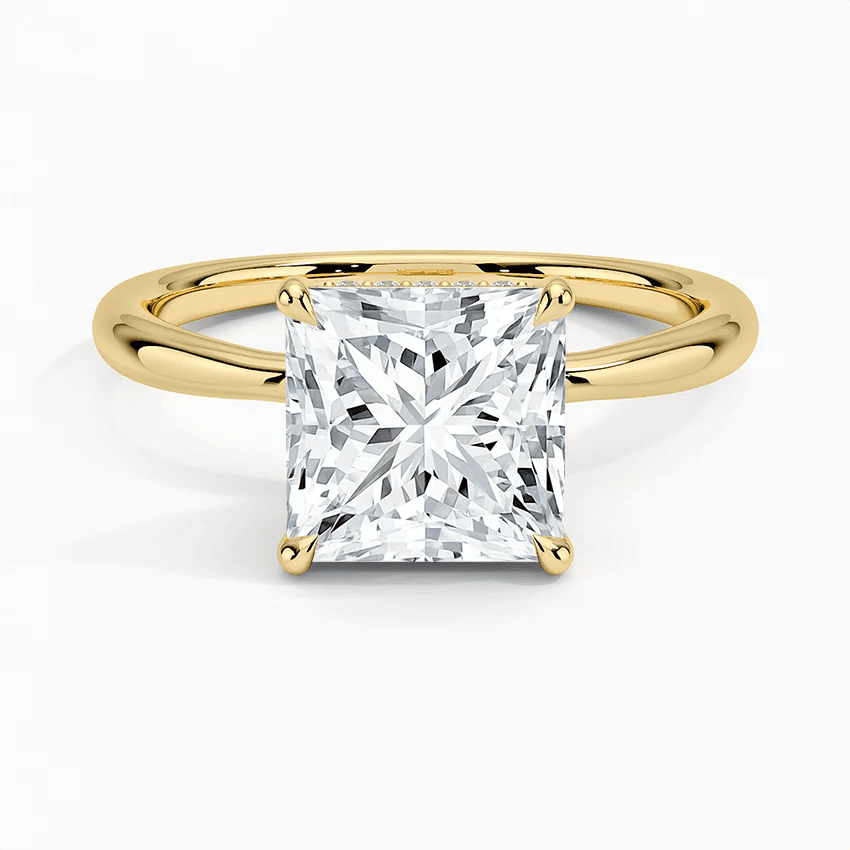
A square cut with brilliant faceting. It has almost as much sparkle as round but at a lower price per carat.
The princess cut is square with pointed corners and a facet pattern similar to a round brilliant. That means strong light return and plenty of sparkle, at a lower price than round because less rough diamond is wasted in cutting.
Princess cuts look great in solitaires and can create a bold, geometric look on the finger. The pointed corners are the one thing to keep in mind. They can chip if knocked hard. A setting with corner prongs that protect those points is the right call.
Princess is the second most popular shape after round. If your partner wants a square diamond but still wants serious sparkle, this is the shape to look at.
3. Oval Cut
Best for: Larger appearance, slimming effect on finger, strong sparkle
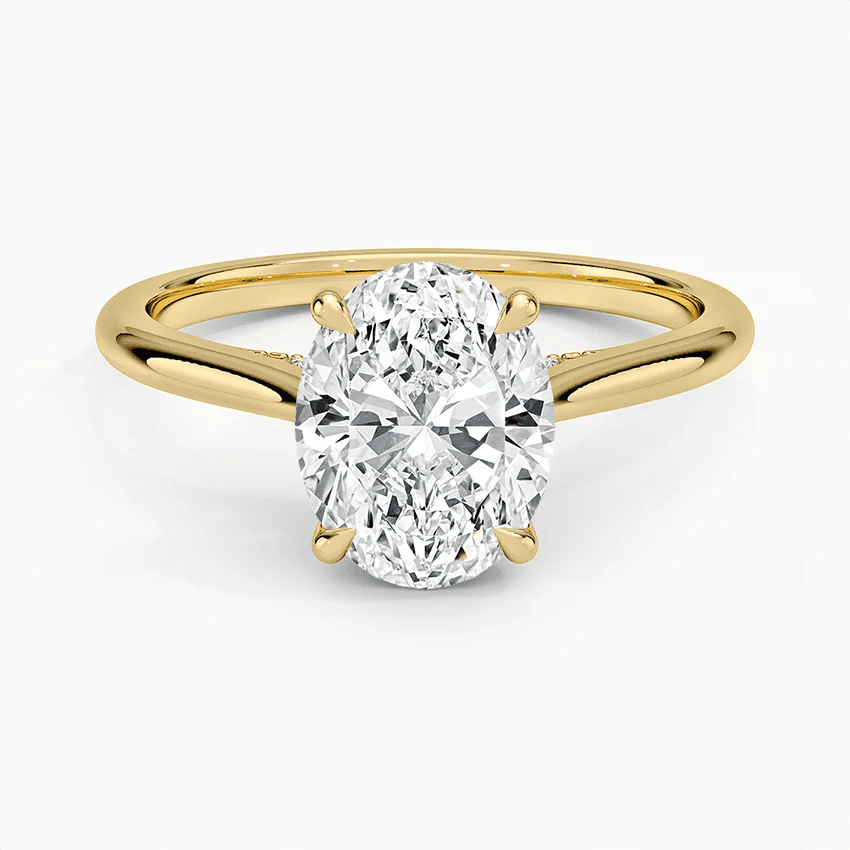
An elongated brilliant cut. Oval diamonds look larger than they are and create a longer, slimmer look on the finger.
Oval diamonds have the same brilliant faceting as round, so the sparkle is comparable. But the elongated shape spreads more surface area across the finger, which makes a given carat weight look bigger than it would in a round stone.
That size illusion is one of the main reasons oval has become one of the most requested shapes in recent years. Buyers get strong light return and a stone that looks substantial, often for less per carat than round.
Some oval diamonds show a “bow-tie,” which is a dark shadow across the center of the stone. This is a natural result of how the facets align. It’s present in nearly all ovals to some degree. When you’re looking at stones, pay attention to how visible it is. A well-cut oval will have a bow-tie that’s minimal and doesn’t pull your eye away from the sparkle.
Brilliant Earth’s 360-degree diamond viewer lets you see each stone individually. That’s the best way to judge bow-tie before you buy.
4. Pear Cut
Best for: Elongating effect, distinctive look, elegant style
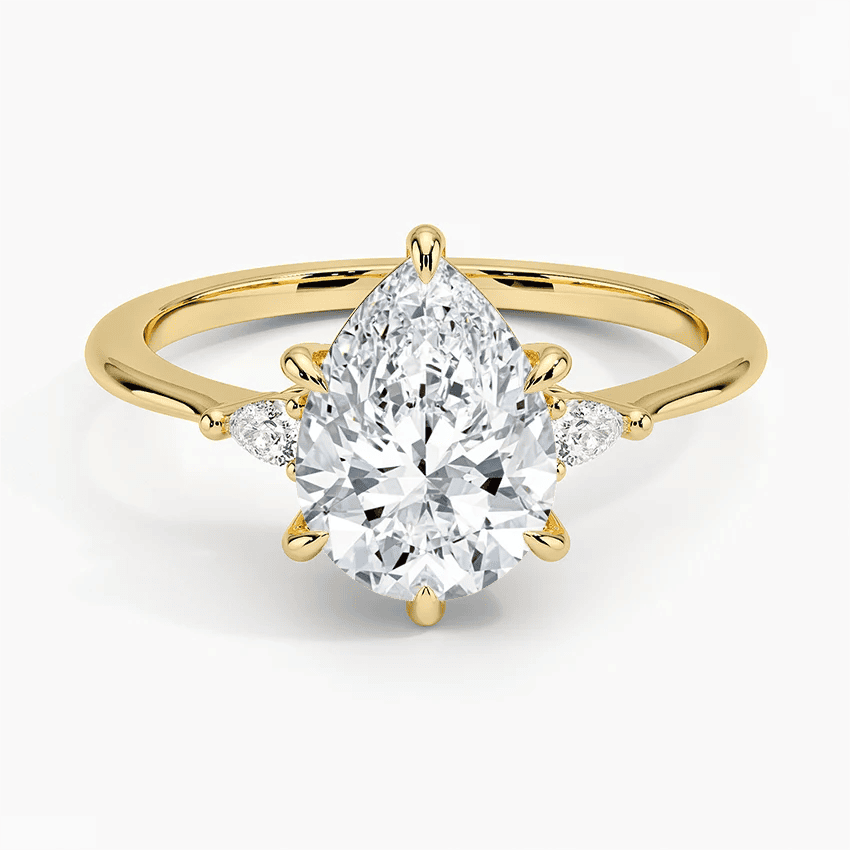
Round on one end, pointed on the other. The shape is distinctive and creates one of the most elegant looks of any diamond cut.
Pear-shaped diamonds are cut with brilliant facets, so they sparkle well. The elongated shape makes the diamond look larger than a round of the same weight, and when worn with the point facing up toward the fingernail, it creates a lengthening effect on the finger.
Like ovals, pears can show a bow-tie. The same rule applies: look at the individual stone, not just the shape.
The pointed tip is a fragile area. A good prong setting that covers and protects the tip is important. Most pear solitaires are designed with this in mind, but it’s worth confirming when you look at settings.
Pear is a strong choice for someone who wants something a little different without going fully outside the mainstream. The shape is distinctive but still recognized and classic.
5. Radiant Cut
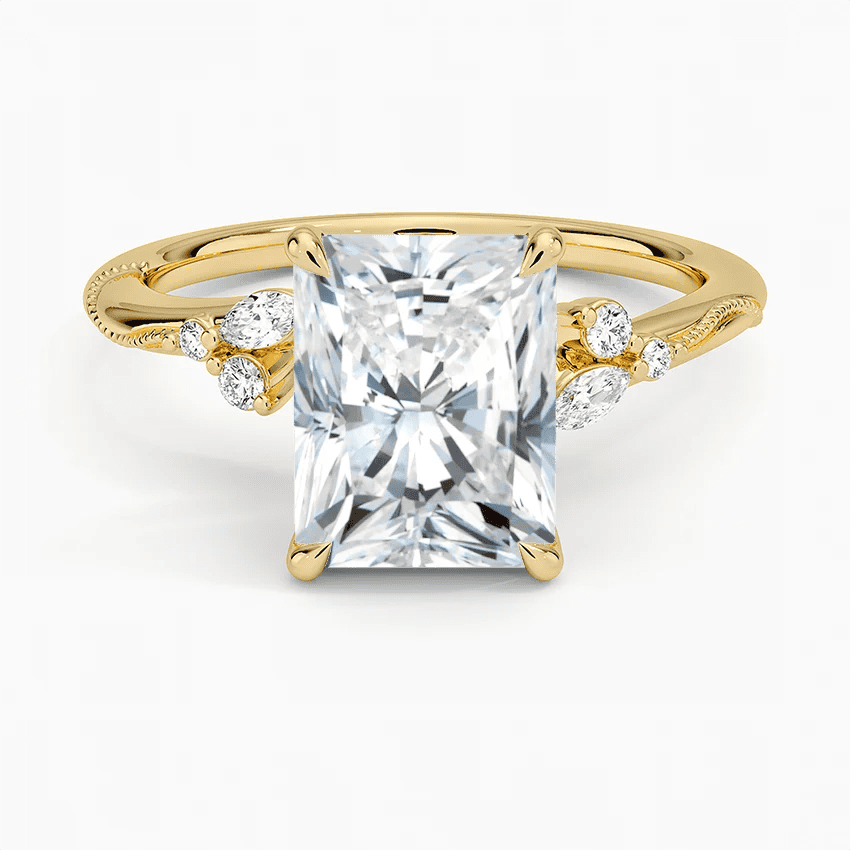
Best for: Rectangle or square look with brilliant sparkle, no sharp corners
A rectangular or square shape with brilliant faceting. Lots of sparkle in a non-traditional silhouette.
The radiant cut combines the geometry of an emerald cut with the light return of a round brilliant. The corners are cropped, which makes it more durable than a princess cut and easier to set.
Radiant diamonds tend to have strong light performance because of the brilliant faceting pattern. The rectangular version of the shape gives you an elongated look similar to an emerald but with considerably more sparkle.
If your partner wants something that doesn’t look like a round but still wants serious light return, radiant is worth putting on the list. It sits between the emerald and princess cuts in terms of style, and it works well in both solitaire and halo settings.
6. Emerald Cut
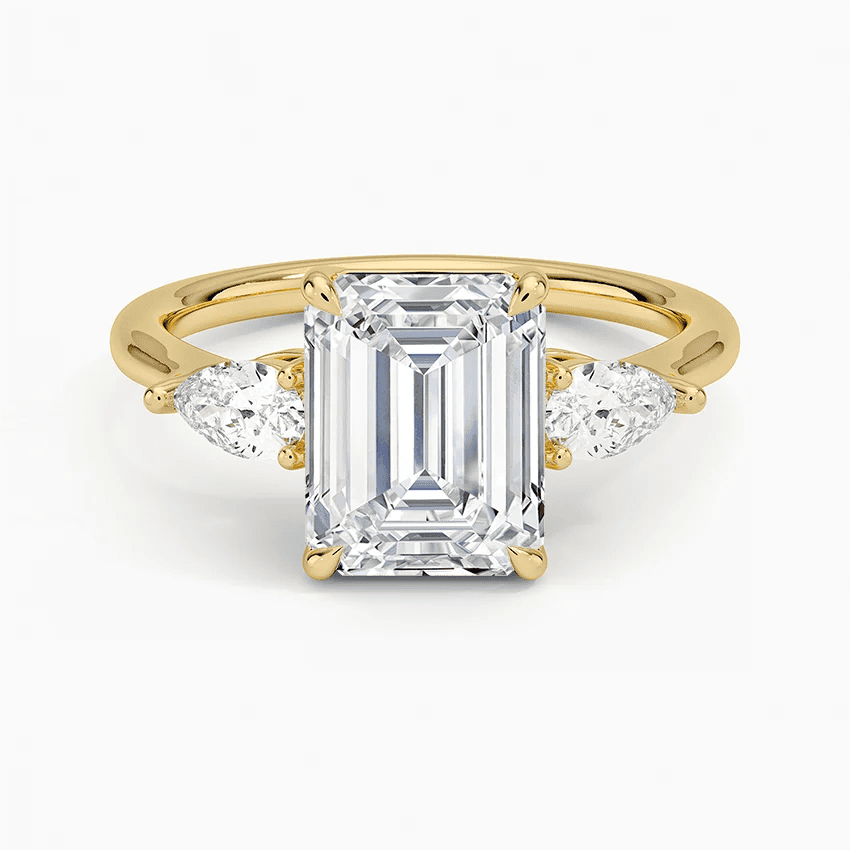
Best for: Clean, architectural look, hall of mirrors effect, understated elegance
A rectangular cut with stepped facets. Less sparkle than brilliant cuts, but a deep, glassy look that’s all its own.
Emerald cuts have long, step-cut facets that run parallel to each other. Instead of the high-sparkle flash of a brilliant, you get a different optical effect: long, mirror-like flashes called the “hall of mirrors” effect. It’s elegant and striking in its own way.
Because of those large, flat facets, emerald cuts show inclusions and color more easily than brilliant cuts. That means quality matters more here. If you’re buying an emerald cut, go higher on clarity and color than you might otherwise.
The shape is rectangular with cropped corners, which makes it look classic and architectural. It suits people who appreciate a clean, geometric look over maximum sparkle.
Emerald cuts tend to be less expensive per carat than round brilliants, but you’ll often want to spend the savings on better quality to take full advantage of the cut.
7. Cushion Cut
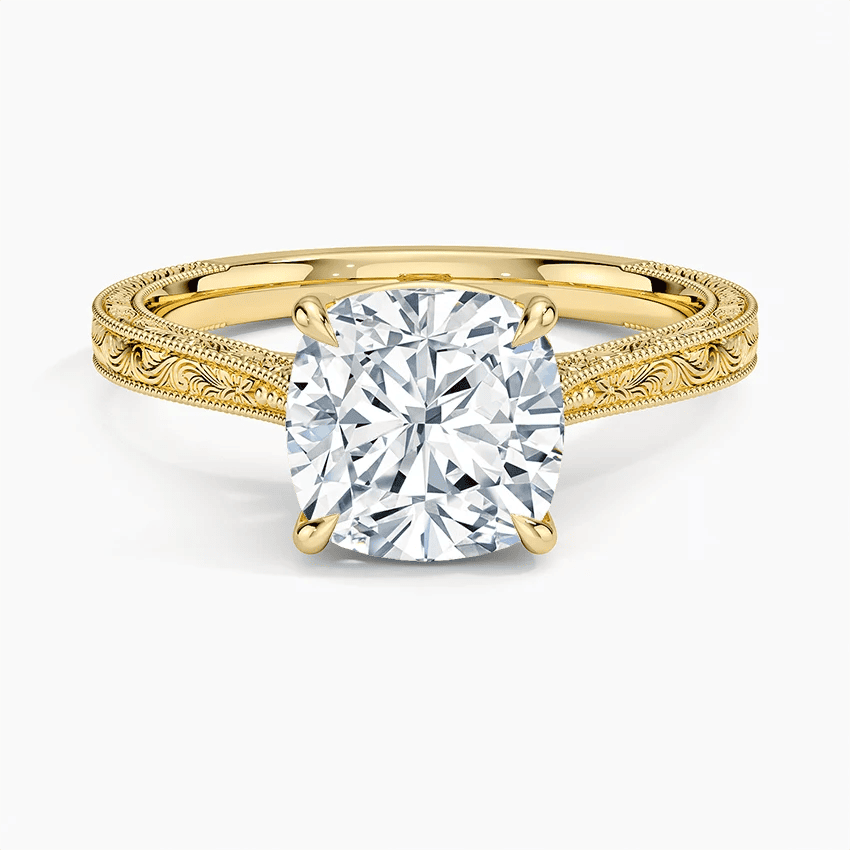
Best for: Vintage and romantic look, soft silhouette, halo settings
A square or rectangular cut with rounded corners and curved sides. Soft, romantic, and one of the most popular shapes for vintage-style rings.
Cushion cuts have been around for over a century. The rounded corners give the shape a softer, more antique look compared to the sharp geometry of princess or radiant. They work especially well in vintage and halo settings.
Sparkle varies more in cushion cuts than in most other shapes because there’s less standardization in the facet pattern. Some cushions have a “chunky” pattern with large bright flashes. Others have a “crushed ice” pattern with small, scattered reflections. Both are legitimate. It’s a matter of preference.
Looking at individual stones side by side is the best way to decide which pattern you prefer. Brilliant Earth’s 360-degree viewer helps here.
Cushion cuts are often less expensive per carat than round diamonds. For buyers who want a vintage feel with solid sparkle, cushion is one of the best options.
8. Asscher Cut
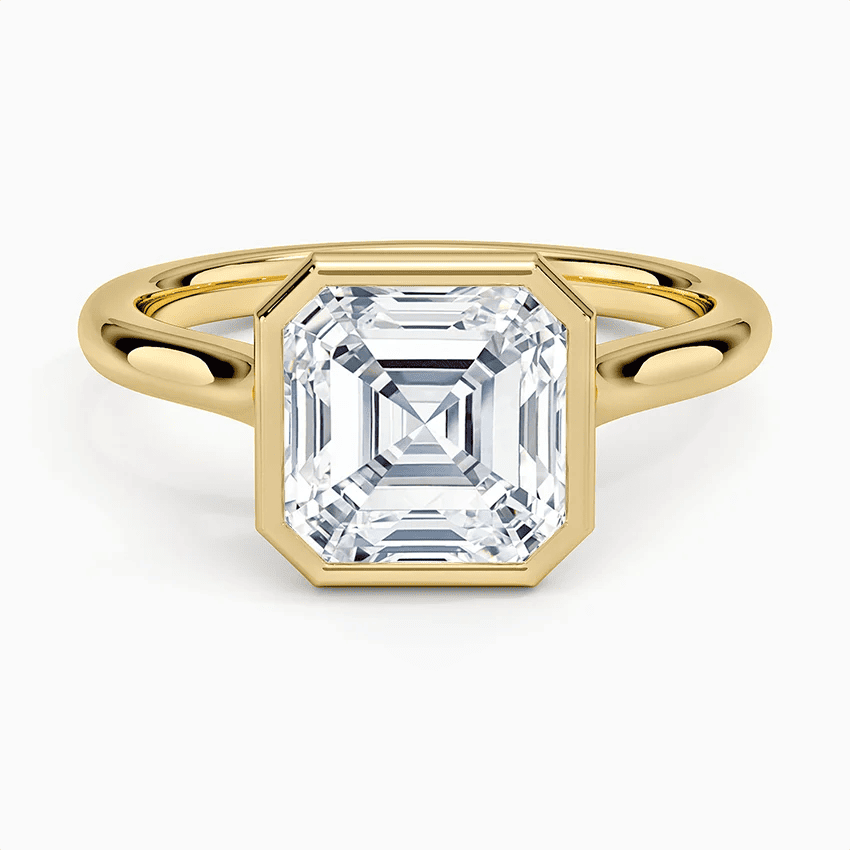
Best for: Art Deco style, square step-cut look, vintage settings
A square step cut with cropped corners and a distinctive octagonal shape. Art Deco in origin and unmistakable in person.
The Asscher cut is essentially a square emerald. It has the same step-cut facets and the same hall of mirrors effect, but in a square silhouette with deeply cropped corners that give it an almost octagonal outline.
Like the emerald cut, Asscher is transparent to inclusions and color. Higher clarity and color grades are more important here than in brilliant cuts.
Asscher cuts have a strong Art Deco aesthetic. They work particularly well in Art Deco and vintage-inspired settings, though they can also look great in a plain solitaire for someone who appreciates a quieter, more architectural style.
This is a shape for someone who knows what they want. It’s not a shape most people stumble into. If your partner has specifically mentioned an Asscher, they’ve done their research.
9. Marquise Cut
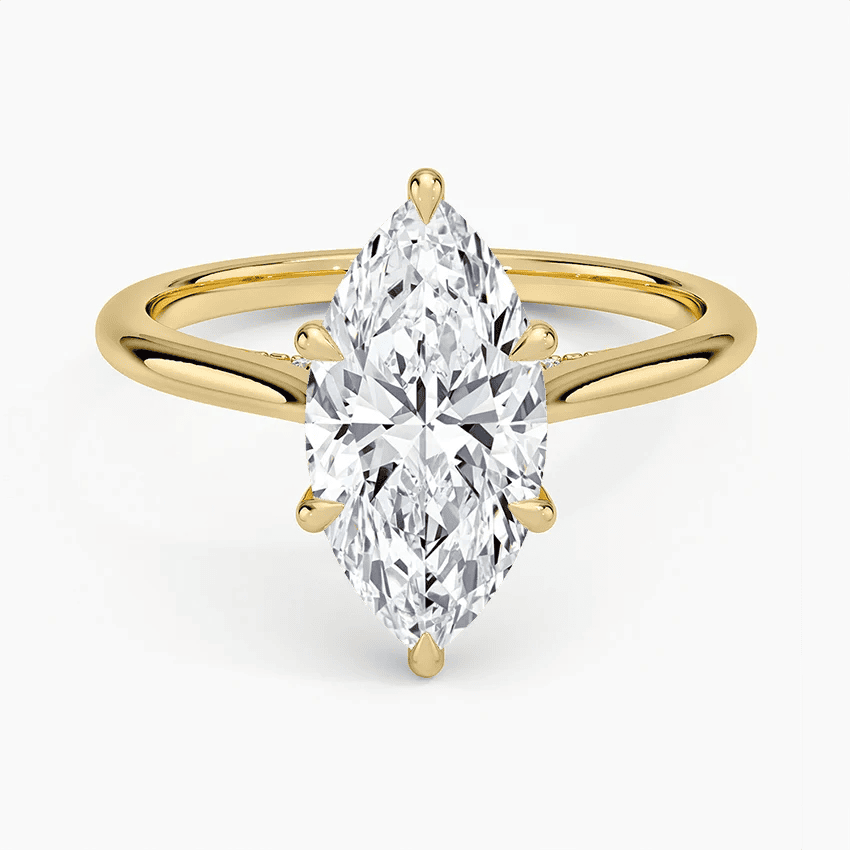
Best for: Maximum elongation, large appearance, dramatic look
An elongated shape with pointed ends at both sides. Creates one of the most dramatic finger-lengthening effects of any diamond shape.
The marquise cut is an elongated brilliant with points at both ends. It has strong light return and shows more surface area per carat than almost any other shape, which makes it look bigger than its weight suggests.
The pointed ends require protected prong settings, similar to a pear. Some buyers worry that marquise looks too vintage. Paired with a modern solitaire or bezel setting, it reads as contemporary.
Marquise diamonds also show bow-tie shadows like ovals and pears. Check individual stones to find one with a minimal bow-tie.
If your partner wants a dramatic, elongated look with strong sparkle, marquise delivers that in a way few shapes can match.
10. Heart Cut
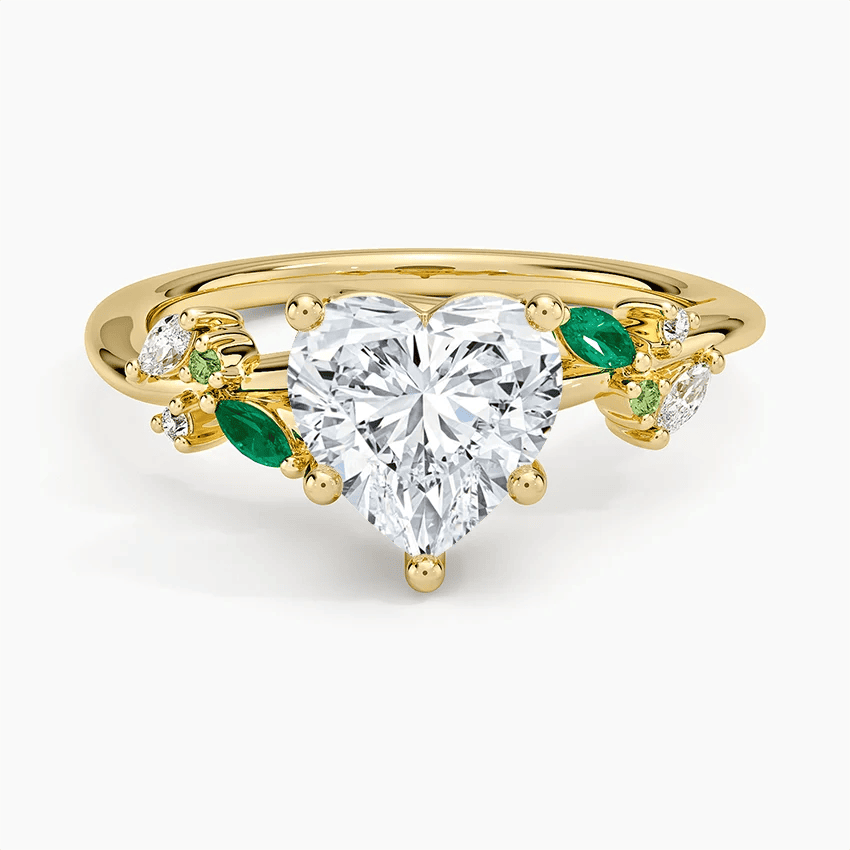
Best for: Romantic statement, distinctive shape, 0.5 ct and above
The most romantic shape in diamond cutting. Not for everyone, but for the right person, there is no other choice.
Heart-shaped diamonds are cut with brilliant facets and can produce good sparkle when well-cut. The challenge is symmetry. The two lobes need to be even and the cleft at the top needs to be clearly defined. A poorly cut heart loses the shape entirely.
Smaller heart diamonds can lose their definition. Most jewelers recommend going no smaller than 0.5 carats for the shape to read clearly. At 1 carat and above, the shape shows beautifully.
Heart-shaped diamonds are typically less expensive per carat than round. The shape is cut from a rough diamond profile that reduces waste.
This shape works best for someone who specifically wants it. It’s a statement. If your partner has a romantic streak and has mentioned hearts before, this is worth considering. If you’re not sure, go with one of the shapes above.
How to Choose the Right Engagement Ring Shape
Here’s the honest answer: the right shape is the one your partner wants. If you already know, you’re done. Skip to the Brilliant Earth ring builder and start picking settings.
If you’re not sure, use these three questions to narrow it down.
1. What shapes have they pointed out or pinned?
Most people shopping for engagement rings have a Pinterest board, a saved Instagram post, or a photo on their phone. Ask to see it or check with a family member who might know. The shape your partner gravitates toward is almost always visible if you look.
2. What does the rest of their jewelry look like?
Do they wear simple, geometric pieces? They might prefer an emerald or Asscher. Do they wear bold, sparkly items? A round or cushion is probably the right direction. The jewelry someone already wears tells you a lot about what they’ll actually put on every day.
3. Are they active or hard on their hands?
Pointed corners chip. If your partner works with their hands, does sports, or has mentioned worrying about damaging a ring, avoid princess (sharp corners) and marquise or pear (pointed tips). Round, oval, cushion, and emerald are more durable in daily wear.
When you’ve answered those three questions, you’ll have it narrowed down to two or three shapes. From there, the best thing you can do is see them in person.
Brilliant Earth has 40+ stores across the US. You can book an appointment, bring your shortlist of shapes, and try them on with different settings. That one hour in a store will tell you more than an hour of online research. A stone that looked perfect on a screen might not suit the hand. And a shape you weren’t expecting might stand out immediately.
Virtual appointments are also available if you can’t get to a store.
Bottom Line
There is no universally best engagement ring shape. Round is the most popular. Oval is the fastest-growing. Emerald and Asscher suit people who prefer a quieter, more architectural look. Cushion and halo pairings are classics. Heart is for someone who knows exactly what they want.
What matters is the person wearing it. Once you know the shape, Brilliant Earth has one of the largest diamond selections available in any shape you want, with every stone IGI or GIA certified and sourced to their Beyond Conflict Free standard. Their Design Your Own tool lets you build the complete ring online, and 40+ stores mean you can see anything you like in person before you buy.
That’s a hard combination to beat at any price.
Start exploring at brilliantearth.com.
FAQ
What is the most popular engagement ring shape?
Round is by far the most popular engagement ring shape, accounting for the majority of sales. It produces more light return than any other cut, which means maximum sparkle. If your partner hasn’t expressed a preference, round is the safest starting point.
Which engagement ring shape looks the biggest?
Oval, marquise, and pear diamonds tend to look the largest for their carat weight because of their elongated shape. A 1-carat oval, for example, will often look larger on the finger than a 1-carat round of the same quality. This is a good strategy if budget is a consideration.
Which engagement ring shape is the most affordable?
Oval, pear, marquise, radiant, and cushion shapes tend to cost less per carat than round diamonds. Round diamonds are priced higher because more rough diamond is lost in cutting. Choosing a non-round brilliant shape is one of the most effective ways to get a larger diamond at a lower price.
What shape engagement ring is best for small hands?
Elongated shapes like oval, pear, and marquise create a lengthening effect on the finger that can be especially flattering on shorter fingers. Round and cushion also look proportional on most hand types. Avoid very wide shapes if the fingers are short, as they can make the hand look wider.
What is the difference between a cushion cut and a radiant cut?
Both are brilliant-faceted square or rectangular cuts with cropped corners. The main difference is shape: cushion cuts have slightly curved sides and softer corners, giving them a more rounded, vintage feel. Radiant cuts have straight sides and a crisper, more angular silhouette. Cushion is more common in vintage settings. Radiant tends to look more contemporary.
Does Brilliant Earth have all engagement ring shapes available?
Yes. Brilliant Earth carries natural and lab grown diamonds in all 10 shapes covered in this guide, plus others. You can filter by shape on their website and pair any diamond with hundreds of ring settings using their Design Your Own tool. Brilliant Earth also has 40+ stores where you can see multiple shapes in person.
Should I buy a natural diamond or a lab grown diamond for an engagement ring?
Both are genuine diamonds with the same physical and optical properties. The main difference is price and origin. Lab grown diamonds cost significantly less than natural diamonds of the same quality. Natural diamonds have a different kind of value for buyers who care about rarity and origin. Brilliant Earth carries both, and their 360-degree viewer lets you compare stones side by side.
Still afraid of getting ripped off?
Before you buy a diamond, get personal buying advice from industry veterans. We'll help you get the best diamond for the money.
Ask your diamond purchase question here
DISCLAIMER: We don't use your email for marketing. Period.
You Might Like
Diamond Prices: A Complete Guide
A diamonds’ price is determined primarily by the 4 Cs of the diamond. On the wholesale level, diamond prices are first based on a diamond shape and
The Best Places to Buy Engagement Rings
Buying an engagement ring is often one of the first major purchases in a person's life. The process can be fraught with tension as there is so ma
1 Carat Diamond Price & Buying Guide
A wide range of 1 carat diamonds exist both in online markets and local diamond jewelry stores. Not only are there significant differences in beauty