We are reader-supported. Buying through any red colored link on our site may earn us commissions. Learn More.
Most people shopping for an engagement ring start with colorless diamonds. That’s fine. But once you see a vivid yellow or a deep blue diamond sitting in a setting, it’s hard to go back. Colored diamonds are rare, they’re striking, and they carry a kind of personality that a white diamond doesn’t.
I’ve spent over 25 years reviewing diamonds and visiting stores. Colored diamonds are one of the most misunderstood categories in the industry. The grading works differently. The pricing follows different rules. And the options for natural vs. lab grown diamonds are now genuinely meaningful. This guide covers everything you need to know to choose the right colored diamond.
Bottom Line Up Front
Colored diamonds are graded on intensity, not absence of color. Yellow diamonds are the most accessible entry point for natural colored stones. Blue, pink, and green diamonds are rarer and priced accordingly. Lab grown colored diamonds give you more size for the money without sacrificing the look or the certification. Brilliant Earth carries both natural and lab grown colored diamonds in dozens of hues, and every stone is held to their Beyond Conflict Free™ sourcing standard.

Here’s What We’ll Cover:
- Why Choose a Colored Diamond?
- What Colors Are Diamonds Available In?
- How to Choose a Colored Diamond
- Natural vs. Lab Grown Colored Diamonds
- Colored Diamond Grading
- Where to Buy Colored Diamonds
- Featured Colored Diamonds at Brilliant Earth
- FAQ
Why Choose a Colored Diamond?
The short answer: because it suits you. A colored diamond makes a statement that a colorless diamond can’t. It’s the ring that people notice across the room and ask about. And for buyers who want something that reflects their personality rather than a standard expectation, a colored diamond delivers that.
There’s also a practical side. Lab grown colored diamonds in particular give buyers access to bold color, larger carat weights, and certified stones at prices that natural colorless diamonds at the same size can’t match. If you’ve been looking at colorless diamonds and feeling like you have to compromise on size or quality, a colored diamond is worth a serious look.
Colored diamonds work in every major engagement ring setting style. They pair especially well with yellow gold, which deepens yellow and warm-toned stones, and with white gold or platinum, which makes blue and pink diamonds pop. Brilliant Earth’s ring builder lets you pair any colored diamond with any of their settings to see the combination before you commit.
What Colors Are Diamonds Available In?
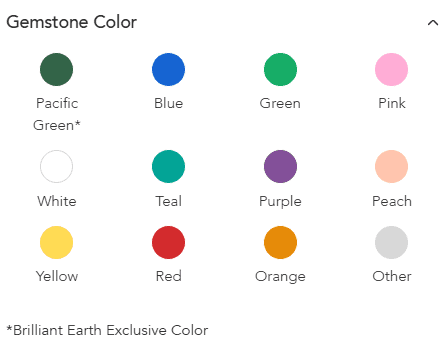
Diamonds come in almost every color of the spectrum. The most common fancy colored diamonds you’ll find at Brilliant Earth include:
| Color | What Causes It |
|---|---|
| Yellow | Nitrogen atoms during formation. The most common fancy color. |
| Blue | Boron present during formation. Natural blue diamonds are extremely rare. |
| Pink | Structural distortion in the crystal lattice under intense pressure. |
| Green | Natural radiation exposure during formation, often over millions of years. |
| Orange | Nitrogen with a specific molecular arrangement. Pure orange is very rare. |
| Red | Extreme rarity. Same structural distortion as pink, but more intense. Only a handful of natural red diamonds have ever been certified. |
Lab grown colored diamonds replicate the same chemical processes in a controlled environment. The result is the same hue, the same chemical makeup, and a certified stone at a much more accessible price.
How to Choose a Colored Diamond
Buying a colored diamond is different from buying a colorless stone. Here’s what to focus on.
Start with Color Intensity
For colored diamonds, the most important factor is saturation, not the 4 Cs in the traditional sense. A yellow diamond graded ‘Fancy Vivid’ is worth far more than one graded ‘Fancy Light’ even if the cut and clarity are the same. GIA grades colored diamonds on a scale from Faint to Fancy Vivid. Fancy Intense and Fancy Vivid grades command premium prices because the color is strong and pure.
For everyday wear, a Fancy or Fancy Intense grade gives you strong color at a lower price than Fancy Vivid. If budget is a factor, that middle range is where the best value tends to sit.
Match the Color to the Metal
Yellow and warm-toned diamonds look best in yellow gold. The metal reinforces the color and makes it look richer. Blue, pink, and green diamonds often look sharper in white gold or platinum, where the contrast lets the color stand out. Rose gold works well with pink and peach-toned stones.
Brilliant Earth’s ring builder lets you test any color and metal combination with real product images. It’s worth spending time there before making a decision.
Think About the Setting Style
Colored diamonds show color most clearly in minimal settings. A solitaire or a bezel setting with less surrounding metal lets the stone breathe and display its full hue. A halo setting can make the colored center stone look larger and more intense because the surrounding colorless diamonds create contrast. Both approaches work, but they give you a different effect.
Check Certification
Every colored diamond you buy should come with a GIA or IGI certificate. The certificate tells you the exact color grade, the hue, the tone, the saturation, and the clarity. Without that paperwork, you have no way to verify what you’re actually getting. Brilliant Earth includes certification with every colored diamond they sell.
Natural vs. Lab Grown Colored Diamonds
This is one of the most practical questions in the colored diamond category right now.
Natural Colored Diamonds
Natural colored diamonds formed over billions of years under specific geological conditions. That rarity is part of what gives them their value. A natural blue diamond, for example, requires the presence of boron during formation, which only happened in a very small number of diamond deposits worldwide. Natural pink diamonds from the Argyle mine in Australia, which closed in 2020, are especially sought after because the supply is now finite.
Every natural colored diamond at Brilliant Earth meets their Beyond Conflict Free™ standard. That covers five specific areas: no civil war financing, no human rights abuses, fair labor, responsible environmental practices, and community involvement. Brilliant Earth traces natural diamonds back to their country or mining operation of origin. Less than 1% of the world’s natural diamonds qualify.
Lab Grown Colored Diamonds
Lab grown colored diamonds are chemically identical to natural ones. The same elements that create color in nature, boron for blue, nitrogen for yellow, structural distortion for pink and red, are replicated in a controlled environment. The result is a certified diamond with the same optical properties and hardness as a natural stone.
The practical difference is price. Lab grown colored diamonds come in at a significantly lower price than comparable natural stones. That means you can get a larger carat weight, a more intense color grade, or both, for the same budget. Brilliant Earth offers a dedicated 100% Renewable Energy collection of lab colored diamonds, grown using wind and solar power.
Which should you choose? If the natural origin matters to you or you’re buying as an investment, go natural. If you want the most color and size for your money, lab grown is the clear choice. Both are genuine diamonds. Both come certified. The difference is where they came from and what you pay.
Colored Diamond Grading
Colored diamonds aren’t graded on the same D-to-Z scale as colorless diamonds. That scale measures the absence of color. For fancy colored diamonds, GIA developed a separate system that evaluates how much color is present, not how little.
GIA grades fancy colored diamonds across three dimensions:
- Hue: The dominant color (yellow, blue, pink, etc.)
- Tone: How light or dark the color appears
- Saturation: How strong or pure the color is
Based on those factors, GIA assigns one of nine intensity grades: Faint, Very Light, Light, Fancy Light, Fancy, Fancy Intense, Fancy Dark, Fancy Deep, and Fancy Vivid.
Fancy Vivid is the highest grade. It represents the most saturated, purest expression of a color. Fancy Vivid yellow diamonds, for example, are the intense canary-yellow stones that show up in high-end auctions. Fancy Intense is one step below and still commands strong prices. For most buyers, Fancy or Fancy Intense gives you strong visible color at a price that makes sense.
Clarity still matters for colored diamonds, but less than it does for colorless stones. Minor inclusions are often harder to see in a saturated colored stone. For most colored diamonds in the SI1 to VS2 clarity range, you won’t see inclusions with the naked eye.
Where to Buy Colored Diamonds
Colored diamonds are a specialty category. Not every store carries them, and the ones that do don’t all hold their inventory to the same sourcing standard.
Brilliant Earth is one of the few stores where you can browse a real selection of both natural and lab grown colored diamonds in one place, with full certification on every stone and a sourcing standard that goes beyond the industry baseline. Brilliant Earth’s colored diamond inventory spans yellow, blue, pink, green, orange, and red stones in both natural and lab grown options.
Each stone can be bought loose or paired with a setting through Brilliant Earth’s ring builder. You pick the diamond, pick the setting, pick the metal, and see exactly what the finished ring looks like before you order. If you want to see a stone in person before committing, Brilliant Earth has 40+ stores across the US where you can book a one-on-one appointment with a jewelry specialist.
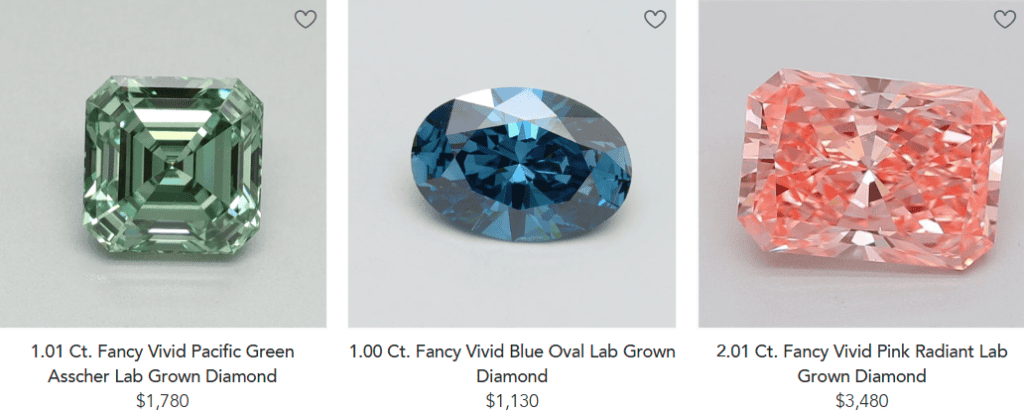
Featured Colored Diamonds at Brilliant Earth
Brilliant Earth’s colored diamond inventory changes as individual stones are bought and new ones are added. The collections below give you a starting point by color. Each link takes you directly to that color category so you can browse current availability and live pricing.
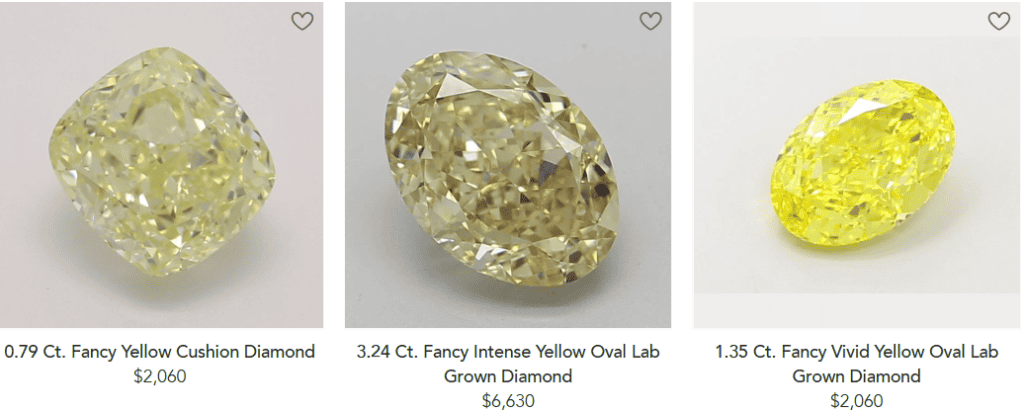
Yellow Colored Diamonds
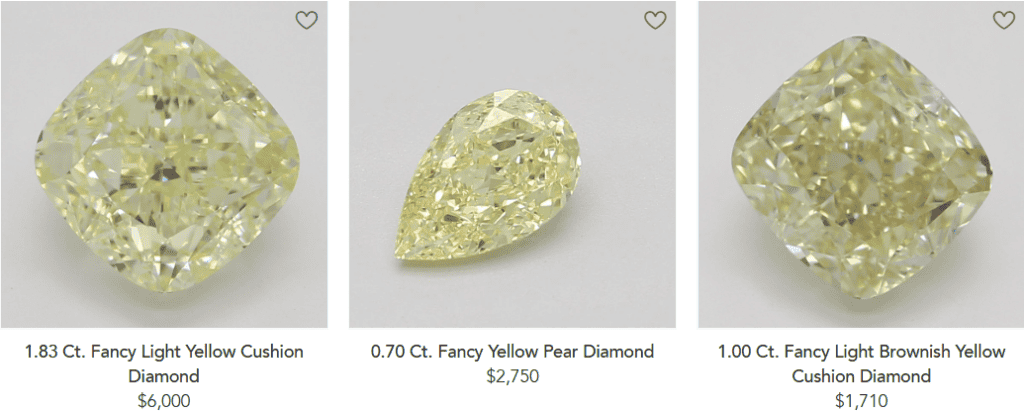
Yellow diamonds are the most common fancy colored diamond and the most accessible entry point for natural stones. The color comes from nitrogen atoms trapped during formation. Yellow diamonds range from pale lemon to deep canary, and the intensity grade makes a major difference in both appearance and price.
Lab grown yellow diamonds are widely available at Brilliant Earth and give buyers a strong Fancy Intense or Fancy Vivid grade at a fraction of the cost of a comparable natural stone.
Blue Colored Diamonds
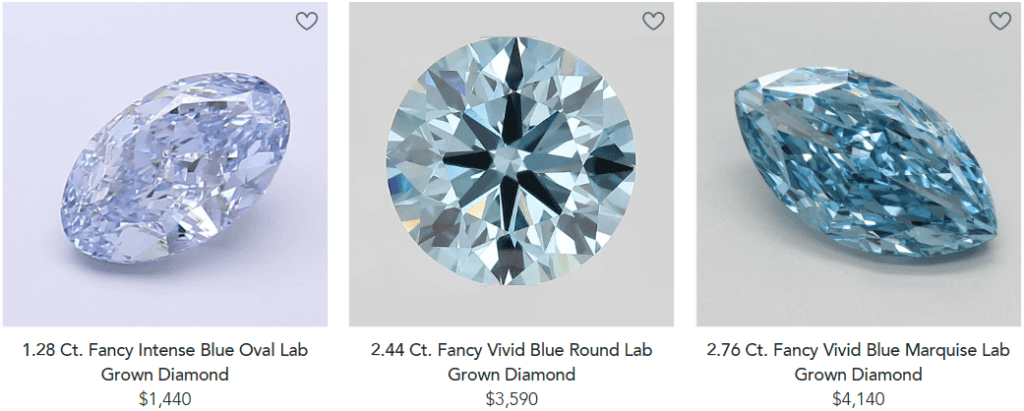
Natural blue diamonds are among the rarest colored diamonds in the world. Their color comes from trace amounts of boron, which is only found in a very small number of diamond deposits. A natural Fancy Intense blue diamond is one of the most valuable stones in the market.
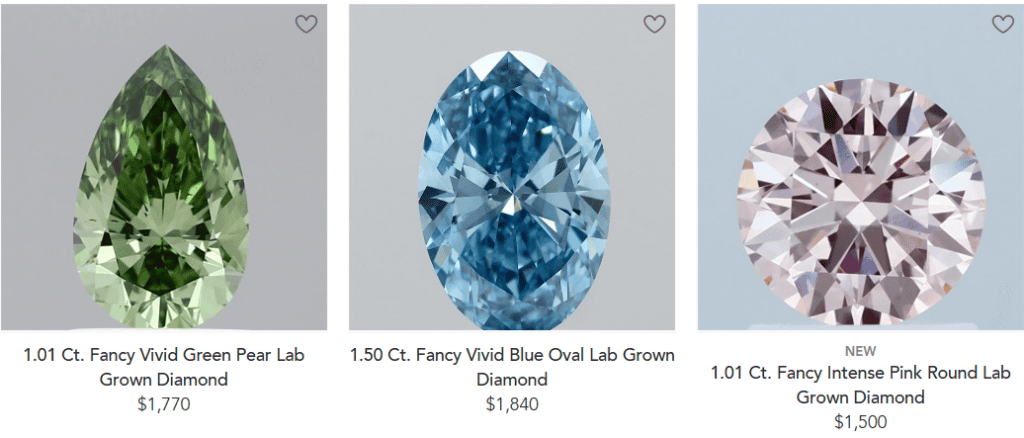
Lab grown blue diamonds make this color accessible. Brilliant Earth carries lab grown blue diamonds in radiant, cushion, oval, and other shapes. The same vivid blue, certified by IGI or GIA, at a price that doesn’t require a second mortgage.
Pink Colored Diamonds
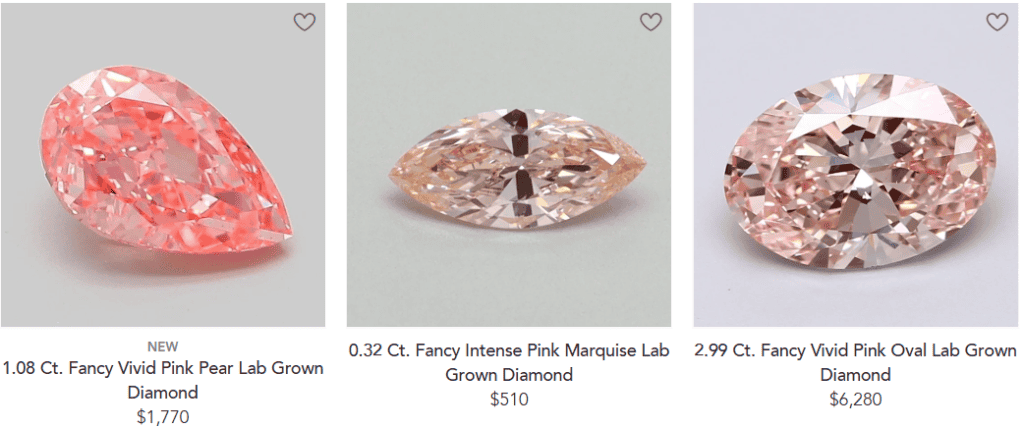
Pink diamonds form when intense pressure and heat cause a structural distortion in the crystal lattice, altering how light interacts with the stone. Natural pink diamonds from the Argyle mine in Australia were the most famous source. Since that mine closed in 2020, natural pink diamond supply has tightened and prices have climbed.
Lab grown pink diamonds are one of the most popular categories at Brilliant Earth right now. You can get a Fancy Vivid pink in a round brilliant or radiant cut that would cost many times more as a natural stone.
Green Colored Diamonds
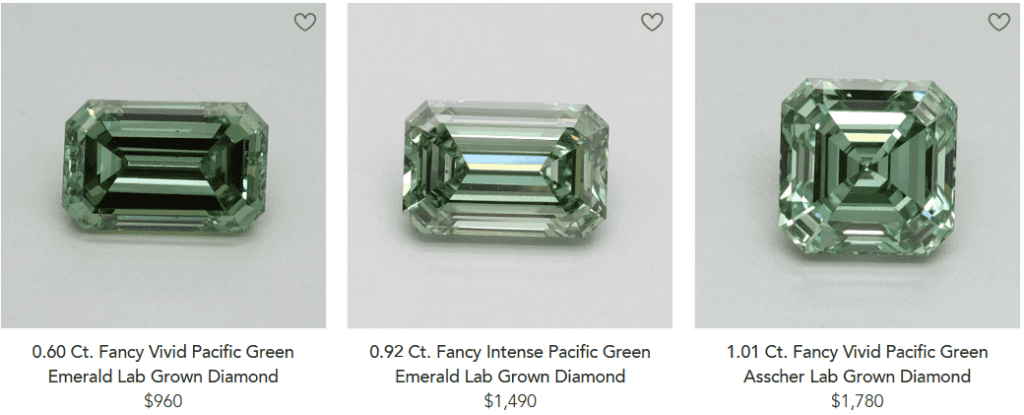
Natural green diamonds get their color from natural radiation exposure during formation, a process that took millions of years. Pure natural green diamonds are extremely rare. Most have secondary hues like yellow or blue. Brilliant Earth also carries Fancy Vivid Green lab grown diamonds across multiple shapes, which is where most buyers will find the color most accessible.
FAQ
How much do colored diamonds cost?
It depends heavily on the color, the intensity grade, and whether the stone is natural or lab grown. Natural yellow diamonds in the Fancy to Fancy Intense range can start in the thousands per carat. Natural blue, pink, and green diamonds at the same grades cost significantly more because they are much rarer. Lab grown colored diamonds in all hues are available at a fraction of the natural price, making Fancy Intense and Fancy Vivid grades accessible to a much wider range of budgets. Brilliant Earth lists live pricing on every stone in their colored diamond inventory.
What are the most popular colored diamond colors?
Yellow diamonds are the most popular because they are the most available and the most recognized fancy color. Pink diamonds have seen a surge in demand, especially since the Argyle mine closed. Blue diamonds are consistently sought after for their dramatic look. At Brilliant Earth, yellow and pink are the top-selling colored diamond categories.
What are the rarest colored diamond colors?
Red diamonds are the rarest colored diamonds in the world. Only a handful of pure natural red diamonds have ever been certified by GIA. After red, natural green, natural blue, and natural pink (especially post-Argyle) are the next rarest. Orange diamonds in pure form without secondary hues are also extremely scarce. Lab grown versions of all these colors are far more available.
Can I use a colored diamond as an engagement ring center stone?
Yes, and it’s becoming more common. Colored diamonds are as durable as colorless diamonds. They score a 10 on the Mohs hardness scale, which means they hold up to daily wear. Brilliant Earth lets you pair any colored diamond from their inventory with any engagement ring setting through their ring builder. You can also bring a stone to one of their 40+ stores and work with a jewelry specialist to find the right setting in person.
Are lab grown colored diamonds real diamonds?
Yes. Lab grown colored diamonds are genuine diamonds with the same chemical makeup, hardness, and optical properties as natural colored diamonds. They are certified by GIA or IGI. The only difference is where they formed. They come in at a significantly lower price than comparable natural colored diamonds, which gives buyers access to larger sizes, more intense color grades, or both.
Still afraid of getting ripped off?
Before you buy a diamond, get personal buying advice from industry veterans. We'll help you get the best diamond for the money.
Ask your diamond purchase question here
DISCLAIMER: We don't use your email for marketing. Period.
You Might Like
Diamond Prices: A Complete Guide
A diamonds’ price is determined primarily by the 4 Cs of the diamond. On the wholesale level, diamond prices are first based on a diamond shape and
The Best Places to Buy Engagement Rings
Buying an engagement ring is often one of the first major purchases in a person's life. The process can be fraught with tension as there is so ma
1 Carat Diamond Price & Buying Guide
A wide range of 1 carat diamonds exist both in online markets and local diamond jewelry stores. Not only are there significant differences in beauty